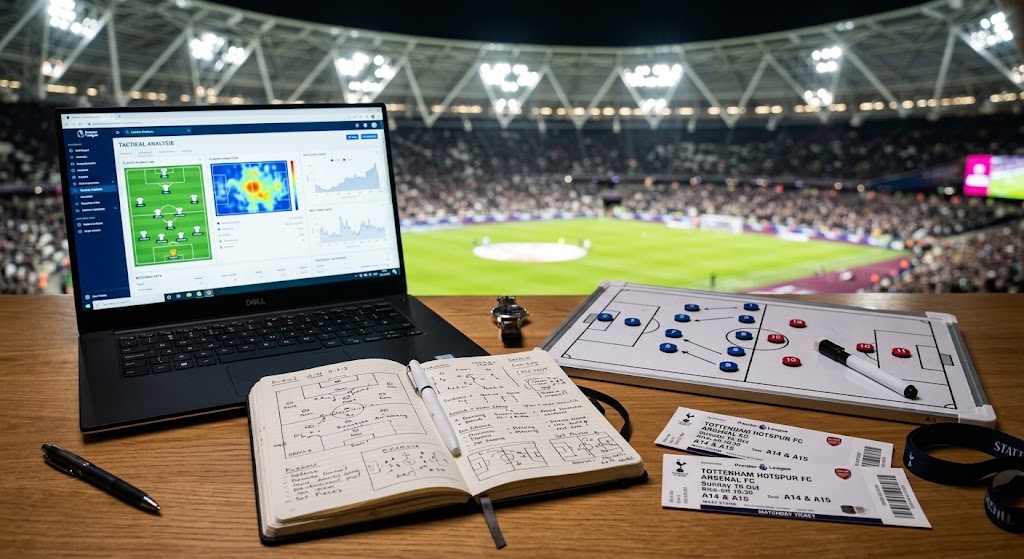
Most people “research” a match by reading the last result and a couple of social posts. That is not research. That is noise.
Match intelligence is a short, repeatable process. You collect a few facts, you decide what they mean for this fixture, and you skip the game when the picture is still messy. You do not need a scouting department. You need a checklist you actually use.
What match intelligence is
It is not a secret scoreline. It is a clearer read of how a game is likely to be played.
You are trying to answer four questions:
- Who needs the points, and who can live with a draw?
- Will the match be open or tight?
- Which players actually change the starting XI?
- Is there a market that fits that picture — or should you pass?
If you cannot answer those in plain language, you do not have a view yet.
The 20-minute pre-match routine
Do this in order. Do not start with a tip and work backwards.
### 1. The fixture, not the badge
Write down home, away, competition, and kick-off. A league game on Sunday is not the same as a midweek European night. Congestion, travel, and rotation matter more than the name on the shirt.
### 2. Table position with context
Points are a map, not a prediction. Check matches played, home and away form, and the next two fixtures. A side sitting fourth with a kind home run is a different animal from a side sitting fourth that has just gone 270 minutes without a shot of real quality.
Use the tables page to see the league shape, then ignore the table until the line-ups are out.
### 3. Recent results, split home and away
Last five games is useful. Last five at home vs last five away is better. A team that scores freely on the road and goes quiet at home will fool you if you only look at the combined row.
Ask: did they control those games, or did they scramble 2-1 wins?
### 4. Team news that actually changes the XI
Injuries only matter if they hit the first eleven or the first press. A backup full-back out is rarely a rewrite. A main striker, a holding midfielder, or a starting centre-back is.
Confirm it close to kick-off. Deadline-day rumours and Thursday gossip are not team news.
### 5. How they are likely to set up
You do not need a 4,000-word tactical essay. You need one sentence per team, for example: “Home side will dominate the ball and attack in wide areas; away side will sit in a mid-block and break.”
If both sentences say “they will sit in,” you are probably looking at a low-event game. If both say “they will go after it,” the game can run hot.
### 6. The market that fits — or no market
Only now do you look at under/over, both teams to score, or a side to win.
- Tight, organised, both happy with a point → under 2.5 is the grown-up conversation, not a 5-fold acca.
- One broken defence and one side that has to chase → overs or BTTS can make sense.
- Favourite in a must-win with a rotated spine → the 1X2 price is often worse than it looks.
If nothing fits, skip the match. Passing is part of researching like a pro.
What to ignore
- One blowout scoreline from last month
- “They always beat this lot” from three seasons ago
- Social clips with no context
- Five tips on five games because you want a full card
A clean notebook with two matches beats a noisy card with nine.
A worked example of the habit
Take a typical weekend. You start with the two games that set the table, not the ones with the loudest fans.
You check whether the home favourite is actually in control at home. You check whether the away side has travelled midweek. You check if a missing No.6 changes how they press. Then you write one line: “This should be a controlled home win, but the goal line is a coin flip — so I skip the total.”
That sentence is match intelligence. The tip, if there is one, comes after.
How BetAI fits the process
Use the site as the desk, not as a magic answer:
- Live scores for state of play
- News for confirmed absences and talking points
- Tables for the shape of the league
- Tips for the shortlist after you have done the checklist
The order matters. Read the match first. Open Tips second.
BetAI view
Professionals are not faster at guessing. They are slower at committing. They collect a few facts, they write the game in one paragraph, and they only play a market that matches that paragraph.
Keep stakes measured. Recheck line-ups 60–90 minutes before kick-off. This is a research method, not a guarantee.
For today’s shortlist, open the Tips page on BetAI.